In this guide
Quick path
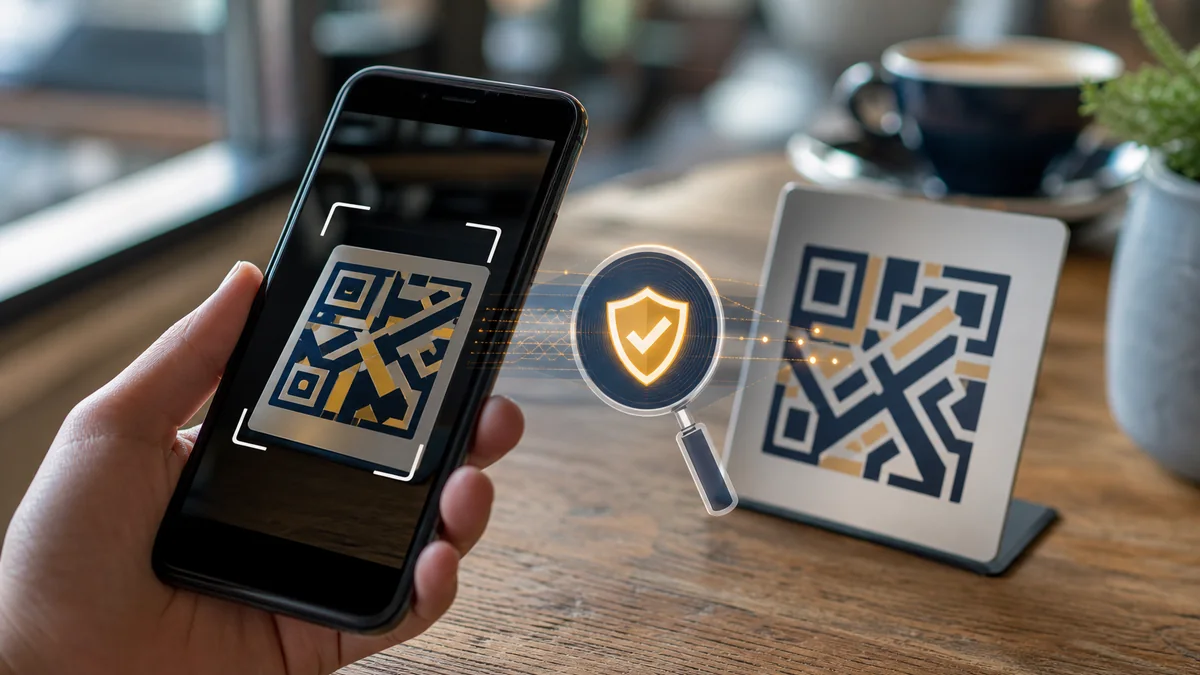
A QR image does not reveal its destination at a glance. That makes codes convenient for menus, tickets, and payments, but it also lets an attacker place a new sticker over a legitimate sign. Safe use is not about rejecting every code; it is about verifying the destination and the context before entering credentials or approving money.
Inspect the physical label
Look for a sticker placed over another code or an altered sign. The purpose of this step is to spot a destination changed after installation. While testing, do not damage property while inspecting it. Record the current state first, make only this change, and repeat the same real-world test. That sequence makes the result easier to trust and reduces the chance of disturbing a setting that already works.
Read the URL preview
Check the complete domain before opening the browser. The deciding factor here is whether it helps catch misspellings and look-alike addresses. Keep in mind that shortened links hide information and deserve caution. Compare the result with the same device, file, account, or application for several minutes; a changed icon or a single successful attempt is not enough evidence of a lasting fix.
Start sensitive actions independently
Open the official banking or service app yourself. This matters because it can remove the QR destination from login and payment. However, card details should not be entered into an unexpected page. Changing several controls together may feel faster, but it hides the cause. Use a one-change, one-test routine and restore the previous value when the expected result does not appear.
Interpret HTTPS correctly
Remember that the lock icon only encrypts the connection. This check is especially useful when you need to avoid treating encryption as proof of organization identity. One caution is that scam sites can also use HTTPS. Write down what you observe before moving on. A short record prevents repeated work and gives support staff something specific to reproduce if the issue continues.
Question permission requests
Reject location, contacts, camera, or file access without a clear need. The purpose of this step is to prevent a simple menu from gaining broad access. While testing, closing the page is safer than guessing. Record the current state first, make only this change, and repeat the same real-world test. That sequence makes the result easier to trust and reduces the chance of disturbing a setting that already works.
Verify payment recipient and amount
Read the final confirmation screen in the trusted payment app. The deciding factor here is whether it helps prevent transfer to a substituted account. Keep in mind that urgency should not skip confirmation. Compare the result with the same device, file, account, or application for several minutes; a changed icon or a single successful attempt is not enough evidence of a lasting fix.
Stop unexpected downloads
Cancel APK or document downloads triggered by a scan. This matters because it can reduce malware and deceptive file risk. However, unknown-source installation should remain disabled. Changing several controls together may feel faster, but it hides the cause. Use a one-change, one-test routine and restore the previous value when the expected result does not appear.
Report altered codes safely
Tell the venue and relevant platform without exposing personal data. This check is especially useful when you need to protect later visitors from the same sign. One caution is that screenshots should hide account details. Write down what you observe before moving on. A short record prevents repeated work and gives support staff something specific to reproduce if the issue continues.
A practical order for testing
For QR Code Scams: What to Check Before Opening a Link on Your Phone, begin by look for a sticker placed over another code or an altered sign, observe the result, then move to reject location, contacts, camera, or file access without a clear need and finally tell the venue and relevant platform without exposing personal data only when the symptom remains. This order preserves the first useful clue. If the initial check resolves the issue, deeper system or hardware changes add risk without adding evidence. Record the time, device or account used, exact message, and behavior after each meaningful change.
A single successful attempt is not a complete verification. Restart or reconnect normally, repeat the same task under ordinary conditions, and confirm that the intended account, cable, app, or profile is still in use. A result that survives several repetitions is stronger than a temporary improvement. When the symptom returns, restore experimental settings and continue from the last confirmed state rather than beginning a new collection of random tweaks.
Common mistakes to avoid
The most common mistake is applying every search result at once. In this case, do not damage property while inspecting it and screenshots should hide account details. Prepare a way back before changing access, personal data, firmware, or warranty-sensitive hardware. Save the original setting, keep an independent copy of important files, and prefer official vendor documentation. These small precautions prevent a narrow problem from turning into lost data or a second unrelated fault.
When to stop and ask for help
If credentials or payment data were submitted, contact the provider promptly and change affected passwords from a trusted device. Stop testing when there is a burning smell, battery deformation, liquid damage, repeated shutdown, or a serious risk of data loss. Avoid opening a device that is under warranty. Give support a timeline, the exact tests performed, and the before-and-after behavior.
Quick checklist
- Inspect for an overlaid sticker.
- Read the full domain preview.
- Use the official app for login or payment.
- Do not trust HTTPS alone.
- Cancel unexpected APK downloads.
Frequently asked questions
Should every step be applied?
No. Start with the section that matches the symptom and stop when the problem is confirmed. Good troubleshooting is about isolating the failing layer, not collecting permanent tweaks.
Why can the problem return later?
An update, a new app, account synchronization, cable movement, or changing temperature can alter the conditions. Keep a short note of the successful test and observe normal use for a few days before calling the issue resolved.